


Introduction
Garlic is one of the most important bulb crops cultivated worldwide for culinary, medicinal, and industrial purposes. It is extensively grown in countries such as India, China, Egypt, Spain, Argentina, the United States, and South Korea. India is one of the leading garlic-producing countries, with major cultivation in Madhya Pradesh, Rajasthan, Gujarat, Uttar Pradesh, and Maharashtra.
Botanically known as Allium sativum, garlic belongs to the Alliaceae family. It is valued for its strong aroma, medicinal properties, and high market demand in domestic as well as export markets. Garlic is used in food processing, pharmaceuticals, pickles, dehydrated flakes, powder production, and traditional medicine with rain pipe.
Garlic is a shallow-rooted crop that requires carefully managed irrigation, especially during germination, bulb formation, and clove development stages. Both water stress and over-irrigation can significantly reduce bulb size, yield, and quality.
Traditional irrigation methods such as flood irrigation often lead to:
- Uneven moisture distribution
- Bulb rotting due to water stagnation
- Nutrient leaching
- Soil compaction
- Increased fungal diseases
Similarly, conventional sprinkler systems require high pressure and may cause excess humidity, encouraging foliar diseases.
To overcome these challenges, farmers are increasingly adopting Laser Spray (Rain Pipe / Rain Hose) irrigation, a modern micro-irrigation system that ensures uniform, gentle, and efficient water application ideal for garlic cultivation.
What is Laser Spray (Rain Pipe / Rain Hose) Irrigation?
Laser Spray irrigation, commonly known as Rain Pipe or Rain Hose, is made from high-quality polyethylene pipes with precisely laser-punched micro-holes. These micro-holes produce a fine spray pattern that mimics natural rainfall, distributing water evenly across the crop surface.
It is technically classified as Spray Irrigation, serving as a low-pressure alternative to conventional sprinkler systems.
Why Spray Irrigation is a boon for farmers
Laser Spray (Rain Pipe / Rain Hose) irrigation is technically called Spray Irrigation and it substitutes traditional sprinkler irrigation. It stands out with many benefits:
- Supports Photosynthesis: Clean, healthy leaves are key to efficient photosynthesis. By preventing dust buildup on leaves, the Laser Spray (Rain Pipe) ensures that your plants absorb sunlight more effectively, enhancing growth and yield.
- Gentle on Crops: The Laser Spray (Rain Pipe / Rain Hose) disperses fine water droplets, ensuring that your delicate fruits and flowers aren’t damaged during irrigation. This gentle spray mimics natural drizzle, making it ideal for maintaining healthy crops.
- Boosts Soil Health and Germination: The Laser Spray (Rain Pipe) irrigation keeps the soil porous, which improves air circulation around the roots and enhances seed germination. By spreading water evenly across the soil surface, it also reduces the risk of waterlogging and seepage loss.
- Perfect for Sandy Soil: Sandy soils, notorious for their quick drainage, benefit immensely from the Laser Spray’s (Rain Pipe) thin water distribution on the soil. The water penetrates efficiently, keeping the soil moist without being wasted.
- Washes away Insects: Its rain like watering of the plant washes away the insects resulting in reduction crop protection spray of insecticides.
- Cooling the crop: It cools the crop canopy as well as the soil and thus saves the plants form heat stress.
Why Laser Spray (Rain Pipe / Rain Hose) for Garlic?
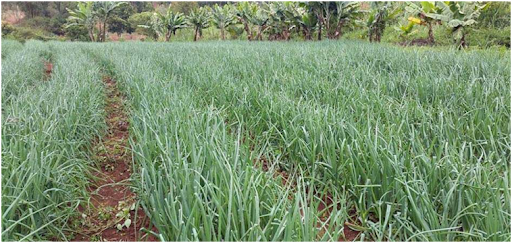
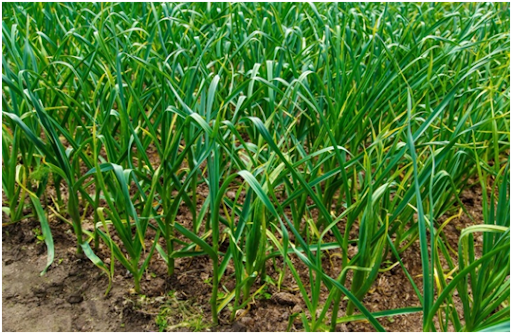
Garlic is planted in close spacing and requires uniform surface moisture, especially during germination and early growth. Flood irrigation causes excessive wetting which increases the risk of fungal diseases. Apart from this, micro irrigation like drip & sprinkler has many advantage over flood irrigation like saving of water, labour, fertilizer and increase of yield and quality of the produce.
Garlic is a close-spacing root crop. Since driplines can cover only one or two rows of the crop, it will take an economically unviable quantity of driplines to irrigate a plot of land with drip irrigation system. Laser Spray (Rain Pipe / Rain Hose) overcomes this limitation as each Spray Pipe can cover multiple crop rows (up to 6–7 meters in the two sides together).Thus, Laser Spray Irrigation becomes an economical and highly efficient choice for carrot farmers.
Laser Spray (Rain Pipe / Rain Hose) has other advantages for the carrot farmers:
- It keeps the soil uniformly moist from top to bottom — essential for straight root formation.
- It prevents crust formation on the soil surface, aiding smooth emergence of tender carrot seedlings.
- The gentle and fine water drops of Laser Spray (Rain Pipe / Rain Hose) does not wash away the seeds.
Laser Spray (Rain Pipe / Rain Hose) has several advantages over Sprinkler which is also used for close spaced crops:
| Parameter | Laser Spray | Sprinkler |
| Working Pressure | 0.7 kg/cm² | 1.5–4 kg/cm² |
| Pump Required | Lower HP | Higher HP |
| Electricity Consumption | Low | High |
| Maintenance | Low | Moderate to High |
| Bulb Damage Risk | No | Possible |
| Soil Compaction | No | Possible |
Popular Models of Laser Spray for Garlic
• Laser Spray 20 mm
• Laser Spray 20 mm Gold
• Laser Spray 32 mm
• Laser Spray 40 mm
• Laser Spray 40 mm Marathon (ideal for long fields up to 100 meters)
All models ensure fine droplet size, uniform spray distribution, and durability suitable for Indian farming conditions.
Garlic Spacing / Coverage Considerations
Garlic is typically planted at:
- Row spacing: 15–20 cm
- Plant spacing: 8–10 cm
Uniform moisture across the entire bed is critical for:
• Even germination
• Uniform bulb formation
• Proper root development
• Balanced nutrient uptake
Laser Spray Installation Spacing
| Model | Recommended Spacing (m) | Recommended Laying Length (m) |
| Laser Spray 20 mm | 3 | 50 |
| Laser Spray 20 mm Gold | 3 | 50 |
| Laser Spray 32 mm | 6–7 | 50 |
| Laser Spray 40 mm | 6–7 | 50 |
| Laser Spray 40 mm Marathon | 6 | 100 |
Results of Laser Spray (Rain Pipe / Rain Hose) Irrigation on Garlic
1. Higher and Uniform Germination
Uniform light irrigation ensures 80–90% germination compared to lower rates in uneven irrigation systems.
2. Bigger and Uniform Bulb Size
Balanced moisture results in uniform clove development and better bulb weight.
3. Reduced Bulb Rot
Controlled irrigation prevents water stagnation, lowering fungal infection risk.
4. Water and Energy Savings
Low-pressure operation reduces electricity and diesel costs.
5. Improved Soil Health
No soil crusting or compaction, leading to better root penetration.
6. Better Market Quality
Uniform bulbs with proper skin formation fetch better market prices.
Conclusion
Garlic cultivation with Laser Spray (Rain Pipe / Rain Hose) irrigation is a modern, economical, and efficient solution for achieving uniform germination, healthy crop growth, and higher marketable yield.
It ensures:
- Uniform water distribution
- Reduced disease incidence
- Improved bulb quality
- Water and energy savings
- Lower maintenance compared to sprinklers
By adopting Laser Spray irrigation, garlic farmers can increase productivity while reducing input costs, making it a sustainable irrigation solution for modern agriculture.
Here are some videos of using Driptech Laser Spray (Rain Pipe)in Garlic Cultivation:https://www.youtube.com/watch?v=MhjZ2akuC6c
FAQ
1. What is Laser Spray (Rain Pipe / Rain Hose) irrigation?
It is a micro-irrigation system with laser-punched holes that distribute water uniformly like rainfall.
2. Does Laser Spray (Rain Pipe / Rain Hose) save water?
Yes. It prevents over-irrigation, runoff, and deep percolation losses.
3. What pressure is required?
It operates at low pressure around 0.7 kg/cm².
4. Can Laser Spray (Rain Pipe / Rain Hose)reduce bulb rot?
Yes. Uniform and controlled irrigation reduces water stagnation and fungal infection.
5. Is Laser Spray (Rain Pipe / Rain Hose)suitable for sandy soils?
Yes. It provides light and controlled irrigation ideal for fast-draining soils.
6. What yield improvement can farmers expect?
Farmers commonly report 10–20% yield improvement due to uniform growth and reduced stress.
7. Is Laser Spray (Rain Pipe / Rain Hose) suitable for Indian climate?
Yes. It performs efficiently across various Indian agro-climatic zones.
8. Does Laser Spray (Rain Pipe / Rain Hose) reduce electricity consumption?
Yes. Low-pressure operation reduces pump capacity and power use.
9. Is maintenance required?
Minimal maintenance is required as there are no moving parts and clogging risk is low.
 +91 80079 78080 / +91 73910 64282