


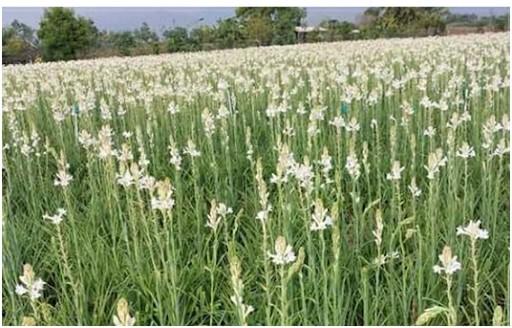
Introduction
Tuberose (Polianthes tuberosa) is one of the most popular and commercially important ornamental flower crops grown across tropical and subtropical regions of the world. It is widely cultivated in countries such as India, Mexico, China, Thailand, Indonesia, Egypt, and parts of Africa for its highly fragrant flowers used in loose flower markets, garlands, bouquets, perfumes, and essential oil extraction so rain pipe irrigation for tuberose is important.
India is one of the leading producers of tuberose, with major growing states including West Bengal, Karnataka, Tamil Nadu, Andhra Pradesh, Maharashtra, Gujarat, Telangana, and Uttar Pradesh. Tuberose flowers are in high demand due to their long spike life, strong fragrance, and excellent market value, making the crop economically rewarding for farmers.
Successful tuberose cultivation depends largely on efficient water management and sound agronomical practices. Tuberose is a shallow-rooted, close-spaced bulbous crop that requires light, frequent, and uniform irrigation throughout its growth cycle. Moisture stress during early growth, spike initiation, or flowering stages can lead to poor sprouting, weak spikes, reduced flower number, and inferior quality. Conversely, excess irrigation results in waterlogging, bulb rot, poor aeration, fungal diseases, and nutrient leaching.
Laser Spray (Rain Pipe / Rain Hose) rain pipe irrigation for tuberose has been doing wonder for the Tuberose farmers.
Here is a video of Laser Spray rain pipe irrigating Tuberose: https://www.youtube.com/watch?v=Q4UheTzfMkU
What is Laser Spray (Rain Pipe / Rain Hose) Irrigation?
Laser Spray irrigation, commonly known as Rain Pipe / Rain Hose, is a modern irrigation system made of high-quality polyethylene pipes with precisely laser-punched micro-holes. These micro-holes create a fine, rain-like spray that mimics natural rainfall, ensuring uniform water distribution across the field.
Besides irrigation, Spray Irrigation brings several additional benefits
- Supports Photosynthesis: Gentle spray washes dust from leaves, allowing tuberose plants to absorb sunlight more efficiently, improving growth and flower quality.
- Gentle on Crops: Fine droplets do not damage delicate leaves, flower spikes, or buds, making it ideal for ornamental crops.
- Boosts Soil Health and Bulb Sprouting: Maintains soil porosity, improves aeration, and supports quick and uniform bulb sprouting.
- Perfect for Sandy and Light Soils: Thin water application prevents rapid percolation losses while maintaining optimum moisture.
- Washes Away Insects: Rain-like spray helps reduce pest load, lowering dependence on chemical sprays.
- Cooling Effect: Cools the crop canopy and soil surface, protecting tuberose plants from heat stress during summer months.
Why Laser Spray (Rain Pipe / Rain Hose) for Tuberose?
Tuberose is a close-spacing flower crop, planted on ridges or flat beds. Drip irrigation can irrigate only one or two rows per lateral, making it costly and less practical for flower crops that require uniform surface moisture.
Laser Spray (Rain Pipe / Rain Hose) overcomes this limitation because a single pipe can cover multiple rows (up to 6–7 meters on both sides together). This makes it an economical, efficient, and farmer-friendly irrigation solution for tuberose cultivation.
Additional advantages for tuberose farmers
- Maintains uniform moisture across the topsoil and bulb zone
- Prevents bulb rot and fungal diseases caused by water stagnation
- Encourages strong spike emergence and uniform flowering
- Keeps soil loose, improving nutrient uptake rain pipe irrigation for tuberose
Laser Spray vs Sprinkler Irrigation rain pipe irrigation for tuberose
rain pipe irrigation for tuberose irrigation is technically classified as Spray Irrigation and acts as an efficient substitute for conventional sprinkler systems which is also used for close spaced crops. The advantage of Laser Spray ( Rain Pipe / Rain Hose) irrigation are:
| Parameter | Laser Spray | Sprinkler |
| Working Pressure | 0.7 kg/cm² | 1.5–4 kg/cm² |
| Pump Required | Lower HP | Higher HP |
| Electricity Consumption | Low | High |
| Maintenance | Low (No moving parts) | Higher |
| Harm to Flowers | No | Possible |
| Soil Compaction | No | Possible |
Popular Models of Laser Spray (Rain Pipe / Rain Hose) for Tuberose
a. Laser Spray (Rain Pipe / Rain Hose) 20 mm
b. Laser Spray (Rain Pipe / Rain Hose) 20 mm Gold
c. Laser Spray (Rain Pipe / Rain Hose) 32 mm
d. Laser Spray (Rain Pipe / Rain Hose) 40 mm
e. Laser Spray (Rain Pipe / Rain Hose) 40 mm Marathon – suitable for long fields and large farms
All models ensure fine droplet size, uniform pressure, and long durability, making them suitable for diverse agro-climatic conditions.
Crop Spacing in Tuberose Cultivation
Proper spacing ensures strong plant growth, good air circulation, and higher flower yield rain pipe irrigation for tuberose.
Recommended spacing:
- Row-to-Row: 30–45 cm
- Plant-to-Plant: 20–30 cm
This spacing supports uniform irrigation coverage and better spike development rain pipe irrigation for tuberose.
Laser Spray Installation Spacing
| Model | Recommended Spacing (m) | Recommended Laying Length (m) |
| Laser Spray 20 mm | 3 | 50 |
| Laser Spray 20 mm Gold | 3 | 50 |
| Laser Spray 32 mm | 6–7 | 50 |
| Laser Spray 40 mm | 6–7 | 50 |
| Laser Spray 40 mm Marathon | 6 | 100 |
Results of rain pipe irrigation for tuberose
1. Uniform Bulb Sprouting
Consistent moisture ensures quick, uniform sprouting and strong early growth.
2. Better Spike Length and Flower Quality
Uniform water supply improves spike height, number of florets, fragrance, and shelf life.
3. Higher Yield and Market Value
Farmers typically observe 15–25% increase in flower yield with better quality spikes.
4. Reduced Disease Incidence
Dry patches and waterlogging are eliminated, reducing fungal and bacterial diseases.
5. Cooling Effect During Summer
Laser Spray reduces heat stress, maintaining fresh and healthy foliage.
6. Easy Field Management
Loose, moist soil improves nutrient uptake and simplifies intercultural operations.
Here are some videos of real farmer experiences using Driptech Rain Pipe (Laser Spray) in Tuberose Cultivation: https://www.youtube.com/watch?v=eLnifYdVgeo&list=PLzonvBR9XKNm7Y1B61bJxc2BPVgyncrh0&index=15
Conclusion
Tuberose cultivation with Laser Spray (Rain Pipe / Rain Hose) irrigation is a modern, economical, and highly efficient solution for flower growers. It ensures uniform moisture, healthy bulb sprouting, superior flower quality, higher yields, and significant savings in water, power, and labor.
By combining advanced irrigation with good agronomical practices, Laser Spray irrigation helps transform tuberose farming into a profitable and sustainable floriculture enterprise.
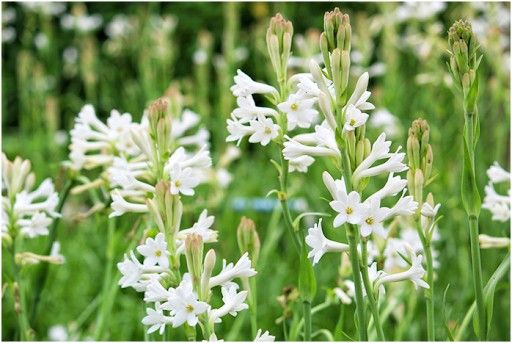
FAQ
1. What is the best irrigation method for tuberose cultivation?
The best irrigation method for tuberose is Rain Pipe / Rain Hose (Laser Spray) irrigation, as it provides uniform, gentle, and controlled water application. It maintains consistent soil moisture without water logging, which is critical for bulb health, spike length, and continuous flowering rain pipe irrigation for tuberose.
2. Why is uniform soil moisture important for tuberose crop?
Uniform soil moisture is essential because tuberose is a long-duration, continuously flowering bulbous crop. Moisture stress reduces sprouting, spike length, and floret number, while excess water causes bulb rot and fungal diseases rain pipe irrigation for tuberose.
3. How does Rain Pipe irrigation work in tuberose fields?
Rain Pipe irrigation uses laser-punched micro-holes that spray fine water droplets like natural rainfall. This ensures even water distribution across multiple rows, keeps soil loose, and prevents crusting and compaction rain pipe irrigation for tuberose.
4. Can Laser Spray (Rain Pipe / Rain Hose) irrigation reduce bulb rot in tuberose?
Yes. Rain Pipe irrigation prevents water stagnation and over-irrigation, which are major causes of bulb rot and fungal diseases in tuberose cultivation.
6. How much water can be saved using Laser Spray (Rain Pipe / Rain Hose) irrigation in tuberose?
Farmers typically report 40–50% water savings compared to flood irrigation, along with better crop uniformity and flower quality rain pipe irrigation for tuberose.
7. What spacing is recommended for tuberose cultivation?
Recommended spacing for tuberose is:
- Row-to-row: 30–45 cm
- Plant-to-plant: 20–30 cm
This spacing supports good aeration, healthy growth, and effective Rain Pipe irrigation coverage rain pipe irrigation for tuberose.
8. What is the ideal working pressure for Laser Spray irrigation?
Laser Spray (Rain Pipe) irrigation works efficiently at low pressure (around 0.7 kg/cm²), reducing pump size, electricity consumption, and operating cost.
9. Is Laser Spray (Rain Pipe / Rain Hose) irrigation suitable for sandy and light soils?
Yes. Laser Spray (Rain Pipe / Rain Hose)irrigation is highly suitable for sandy and light soils because it reduces deep percolation losses and maintains uniform moisture near the root and bulb zone rain pipe irrigation for tuberose.
10. Does Laser Spray irrigation affect flower quality in tuberose?
Laser Spray irrigation improves flower quality by increasing spike length, floret count, stalk thickness, fragrance, and shelf life, making flowers more attractive in the market rain pipe irrigation for tuberose.
11. Can Laser Spray (Rain Pipe / Rain Hose) irrigation help control pests in tuberose?
Yes. The rain-like spray helps wash off insects and dust from leaves, reducing pest pressure and improving photosynthesis.
12. How many rows can one Laser Spray (Rain Pipe / Rain Hose) cover in tuberose cultivation?
Depending on the model, one Laser Spray pipe of 32 /40 mm model can cover multiple rows with a combined width of 7 meters, making it highly efficient for close-spacing flower crops like tuberose. A Laser Spray line of 20 mm model can cover 3 meters.
13. Which Laser Spray model is best for tuberose farming?
- Small to medium farms: 20 mm, 20 mm Gold, or 32 mm
- Large farms / long fields: 40 mm or 40 mm Marathon
Selection depends mainly on field size and dimension of the field rain pipe irrigation for tuberose.
14. Is Laser Spray (Rain Pipe / Rain Hose) irrigation economical for flower farmers?
Yes. The investment is lower than the Drip and Sprinkler Irrigation. It also reduces water usage, electricity cost, labor, and maintenance, while increasing flower yield and market price—making it highly economical for tuberose growers rain pipe irrigation for tuberose.
15. Can Laser Spray (Rain Pipe / Rain Hose) irrigation replace flood irrigation in tuberose?
Absolutely. Rain Pipe irrigation is a superior alternative to flood irrigation, as it avoids soil compaction, water wastage, weed growth, and bulb damage
16. Does Laser Spray (Rain Pipe / Rain Hose) irrigation support continuous flowering in tuberose?
Yes. By maintaining consistent soil moisture throughout the crop cycle, Rain Pipe irrigation supports longer flowering duration and uniform spike production.
17. Is Laser Spray (Rain Pipe / Rain Hose) irrigation safe for delicate tuberose spikes?
Yes. The fine droplets are gentle and do not damage leaves, buds, or flower spikes, unlike high-pressure sprinklers rain pipe irrigation for tuberose.
18. How does Laser Spray (Rain Pipe / Rain Hose) irrigation improve soil health?
It preserves soil structure by preventing compaction, improves aeration, and keeps soil loose—ideal conditions for healthy bulb and root development.
 +91 80079 78080 / +91 73910 64282