


Introduction
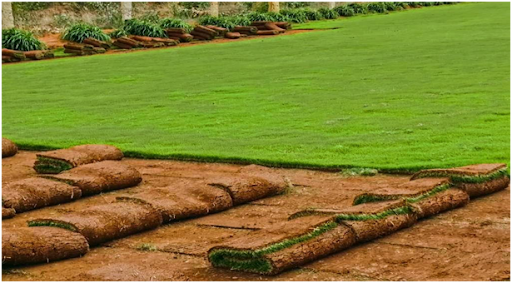
Lawn grass is one of the most widely cultivated landscape crops across the world, grown extensively in residential lawns, parks, sports grounds, golf courses, hotels, resorts, institutional campuses, and public spaces. It is cultivated across tropical, subtropical, and temperate regions in countries such as the United States, India, Australia, the United Kingdom, China, Japan, South Africa, and countries in the Middle East. Commonly grown lawn grass species include Bermuda grass, Doob grass, Zoysia, Rye grass, and Carpet grass, depending on climate and Lawn Grass Irrigation with Rain Pipe use.
Lawn grass plays a vital role in improving aesthetics, reducing soil erosion, moderating temperature, improving air quality, and creating recreational green spaces. However, maintaining a healthy, dense, and uniformly green lawn requires precise water management and proper agronomical practices.
Successful lawn grass cultivation depends heavily on frequent, light, and uniform irrigation, especially during establishment, regrowth after mowing, and hot summer periods. Lawn grass has a shallow root system, and even short periods of moisture stress can cause yellowing, patchy growth, thinning, and poor turf density. On the other hand, excess irrigation leads to waterlogging, soil compaction, poor root aeration, weed infestation, and fungal diseases such as damping-off, root rot, and leaf blight.
Traditional irrigation methods like flood irrigation or poorly designed sprinkler systems often fail to meet these requirements. Flood irrigation causes uneven moisture distribution, water stagnation, soil compaction, and excessive water wastage. Conventional sprinklers operate at high pressure, consume more electricity, and often result in uneven coverage due to wind drift and pressure loss.
To overcome these challenges, landscapers, turf managers, and farmers are increasingly adopting Laser Spray (Rain Pipe / Rain Hose) irrigation, an advanced micro-irrigation technique designed to provide uniform, gentle, and controlled water application, ideally suited for Lawn Grass Irrigation with Rain Pipe.
What is Laser Spray (Rain Pipe / Rain Hose) Irrigation?
Laser Spray irrigation, commonly known as Rain Pipe / Rain Hose, is a modern irrigation system manufactured from high-quality polyethylene pipes with precisely laser-punched micro-holes. These micro-holes generate a fine, uniform spray pattern that closely mimics natural rainfall, ensuring even water distribution across the lawn surface.
Besides irrigating, Spray Irrigation brings several additional benefits
Lawn Grass Irrigation with Rain Pipe
Laser Spray (Rain Pipe / Rain Hose) irrigation is technically classified as Spray Irrigation and serves as an efficient alternative to conventional sprinkler irrigation systems.
Key benefits include:
- Supports Photosynthesis: Clean grass blades free from dust absorb sunlight more efficiently, promoting dense and healthy turf growth.
- Gentle on Turf: Fine water droplets do not disturb young seedlings, stolons, or runners, making it ideal during lawn establishment and regrowth stages.
- Boosts Soil Health and Germination: Maintains soil porosity, improves aeration, and ensures quick and uniform grass seed germination.
- Perfect for Sandy Soil: Thin and controlled water application prevents rapid percolation losses and maintains optimum moisture in light soils.
- Washes Away Insects: Rain-like spray helps reduce insect presence on grass blades, lowering the need for frequent pesticide applications.
- Cooling the Lawn: Cools both the grass canopy and soil surface, protecting turf from heat stress during peak summer temperatures.
Why Laser Spray( Rain Pipe / Rain Hose) for Lawn Grass?
Lawn grass is a dense, close-spacing crop that requires uniform surface moisture over the entire area. Drip irrigation is unsuitable for lawn grass because it wets only limited zones and cannot provide uniform coverage across the turf surface. Similarly, conventional sprinklers require high pressure, consume more power, and often provide uneven coverage.
Laser Spray (Rain Pipe / Rain Hose) overcomes these limitations because a single pipe can uniformly cover multiple meters on both sides (up to 6–7 meters together). This makes it an economical, efficient, and easy-to-install irrigation solution for lawns of all sizes.
Additional advantages for lawn grass cultivation
- Maintains uniform moisture across the soil surface
- Prevents dry patches and uneven turf color
- Avoids soil compaction and surface crusting
- Promotes dense root development and turf thickness
Laser Spray vs Sprinkler Irrigation
| Parameter | Laser Spray | Sprinkler |
| Working Pressure | 0.7 kg/cm² | 1.5–4 kg/cm² |
| Pump Required | Lower HP | Higher HP |
| Electricity Consumption | Low | High |
| Maintenance | Low (No moving parts) | Higher |
| Damage to Turf | No | Possible |
| Soil Compaction | No | Possible |
Popular Models of Laser Spray for Lawn Grass
a. Laser Spray 20 mm
b. Laser Spray 20 mm Gold
c. Laser Spray 32 mm
d. Laser Spray 40 mm
e. Laser Spray 40 mm Marathon – suitable for large lawns, sports grounds, and long fields
All models ensure fine droplet size, uniform pressure, and long durability, making them suitable for residential, commercial, and institutional lawn applications.
Lawn Grass Spacing / Coverage Considerations
Since lawn grass is cultivated as a continuous turf, proper irrigation coverage is more important than plant spacing. Uniform overlapping spray coverage ensures:
- Even moisture distribution
- Uniform grass color and density
- Healthy root development
Laser Spray Installation Spacing
| Model | Recommended Spacing (m) | Recommended Laying Length (m) |
| Laser Spray 20 mm | 3 | 50 |
| Laser Spray 20 mm Gold | 3 | 50 |
| Laser Spray 32 mm | 6–7 | 50 |
| Laser Spray 40 mm | 6–7 | 50 |
| Laser Spray 40 mm Marathon | 6 | 100 |
Results of Laser Spray (Rain Pipe / Rain Hose) Irrigation on Lawn Grass
1. Faster and Uniform Establishment
Laser Spray ensures light and frequent watering, resulting in quick and uniform grass seed germination and stolon spread.
2. Dense, Green, and Uniform Turf
Uniform moisture prevents dry patches, yellowing, and thinning, resulting in lush and evenly green lawns.
3. Water and Energy Savings
Low-pressure operation reduces electricity or diesel consumption while minimizing water wastage.
4. Reduced Disease Incidence
Even watering prevents water stagnation, reducing fungal diseases commonly seen in lawns.
5. Cooling Effect During Hot Weather
Laser Spray lowers canopy temperature, helping lawns remain fresh and stress-free during extreme heat.
6. Easy Maintenance
Loose, well-aerated soil supports healthier roots and simplifies mowing and lawn maintenance operations.
Here are some videos of real farmer experiences using Driptech Laser Spray (Rain Pipe) in Lawn Grass Cultivation: https://www.youtube.com/watch?v=ucASzxjqubM
Conclusion
Lawn grass cultivation with Laser Spray (Rain Pipe / Rain Hose) irrigation is a modern, economical, and highly effective solution for maintaining healthy, dense, and visually appealing lawns. It ensures uniform moisture distribution, faster establishment, reduced disease pressure, and significant savings in water, power, and labor.
By adopting Laser Spray irrigation, homeowners, landscapers, and turf managers can achieve long-lasting, sustainable, and high-quality lawns with minimal operating cost and maximum efficiency.
FAQ
1. What is Laser Spray (Rain Pipe / Rain Hose) irrigation?
Rain Pipe / Rain Hose, also known as Laser Spray irrigation, is a micro-irrigation system made from polyethylene pipes with laser-punched micro holes. These holes release water in the form of a fine spray, similar to natural rainfall, ensuring uniform moisture across the field.
2. How is Laser Spray irrigation (Rain Pipe / Rain Hose) different from drip irrigation?
Drip irrigation supplies water at fixed points near plant roots, which may not be economical for closely spaced crops. Laser Spray irrigation covers multiple crop rows at once, provides uniform surface moisture, works at lower pressure, and is more cost-effective for dense crops.
3. Why is Laser Spray (Rain Pipe / Rain Hose) irrigation suitable for close-spacing crops?
Close-spacing crops require uniform moisture over the entire soil surface. Laser Spray pipes can cover 6–7 meters width on both sides, making them ideal and economical compared to drip lines that cover only one or two rows.
4. Does Laser Spray (Rain Pipe / Rain Hose) irrigation save water?
Yes. Laser Spray irrigation delivers controlled and uniform water, reducing runoff, deep percolation losses, and over-irrigation. This results in significant water savings compared to flood and sprinkler irrigation.
5. What pressure and pump capacity are required for Laser Spray irrigation?
Laser Spray irrigation works at a low pressure of about 0.7 kg/cm², requiring a lower HP pump. This reduces electricity consumption compared to sprinkler systems, which need higher pressure.
6. Can Laser Spray (Rain Pipe / Rain Hose) irrigation help in improving germination?
Yes. The gentle and uniform spray keeps the soil moist without crust formation, leading to faster, more uniform germination and healthier early crop growth.
7. Does Laser Spray (Rain Pipe / Rain Hose) irrigation increase crop yield?
Consistent soil moisture, better root aeration, and reduced plant stress help improve crop growth. Farmers commonly report 10–20% yield improvement when using Laser Spray irrigation.
8. Is Laser Spray (Rain Pipe / Rain Hose) suitable for sandy soils?
Absolutely. Sandy soils drain water quickly, but Laser Spray provides thin and uniform water application, allowing moisture to penetrate efficiently without wastage.
9. Does Laser Spray (Rain Pipe / Rain Hose) system reduce pest and disease problems?
Yes. The rain-like spray helps wash away insects from plant surfaces and reduces dust accumulation. Uniform irrigation also prevents waterlogging, lowering the risk of fungal diseases.
10. Does Laser Spray irrigation cause soil compaction?
No. Unlike flood or sprinkler irrigation, Laser Spray does not compact the soil. It keeps the soil loose and friable, improving aeration and root development.
11. What are the popular Laser Spray models available?
Common models include:
- Laser Spray 20 mm
- Laser Spray 20 mm Gold
- Laser Spray 32 mm
- Laser Spray 40 mm
- Laser Spray 40 mm Marathon (suitable for long fields up to 100 m)
12. What is the lifespan and maintenance requirement of Laser Spray pipes?
Laser Spray pipes are durable, UV-stabilized, and have no moving parts. Maintenance requirements are low, and the risk of clogging is minimal compared to drip systems.
13. Can Laser Spray (Rain Pipe / Rain Hose) irrigation replace sprinkler systems?
Yes. Laser Spray irrigation is technically a spray irrigation system and can effectively replace traditional sprinklers, offering lower pressure operation, reduced energy use, and gentler water application.
14. Is Laser Spray (Rain Pipe / Rain Hose) irrigation suitable for Indian climatic conditions?
Yes. All Laser Spray models are designed to perform well across diverse Indian agro-climatic zones and soil types.
15. Is Laser Spray (Rain Pipe / Rain Hose) irrigation economical for farmers?
Yes. Lower initial investment compared to dense drip layouts, reduced power consumption, water savings, and higher yields make Laser Spray irrigation a highly economical choice for farmers
 +91 80079 78080 / +91 73910 64282